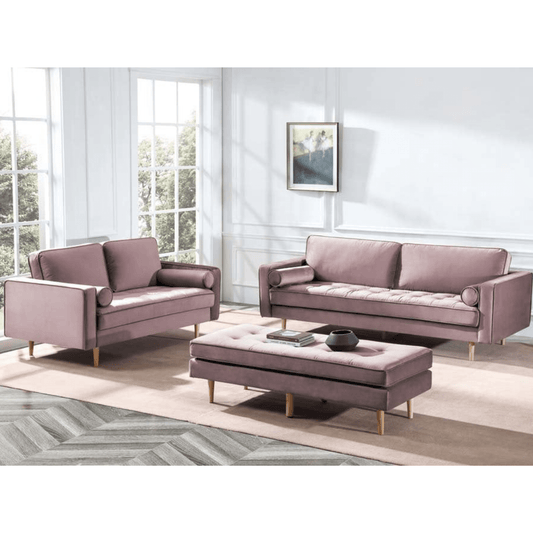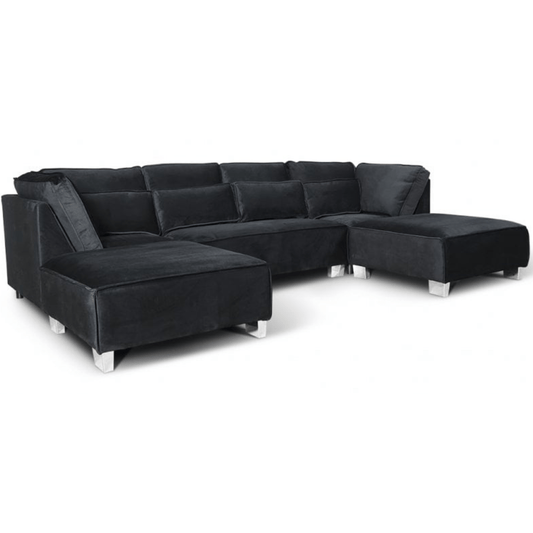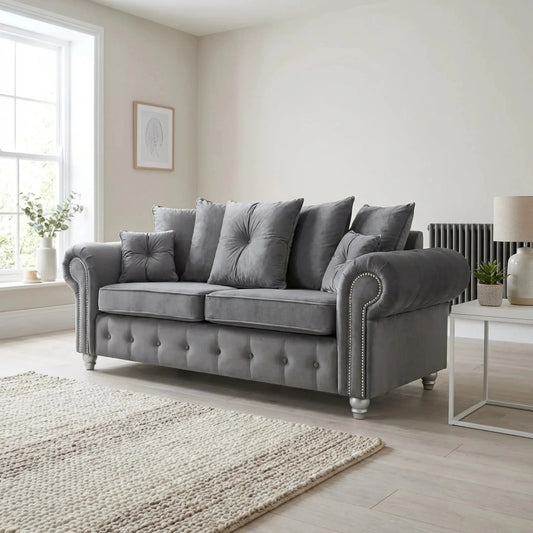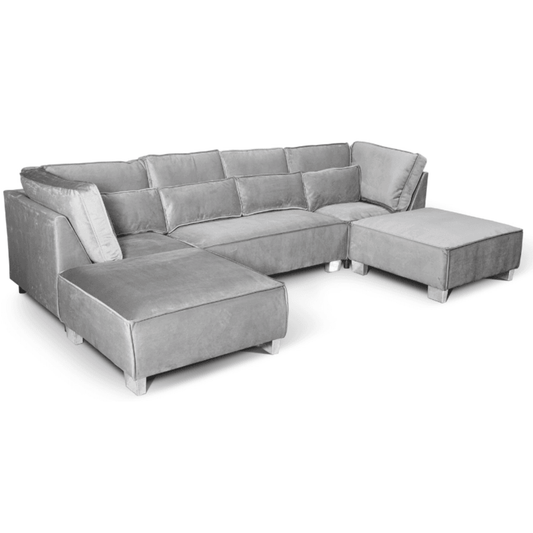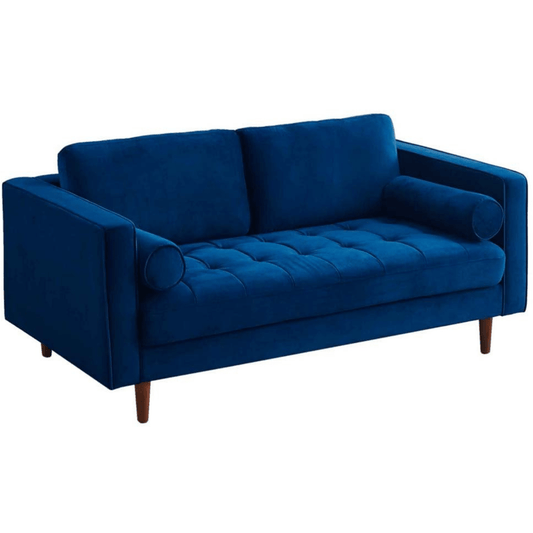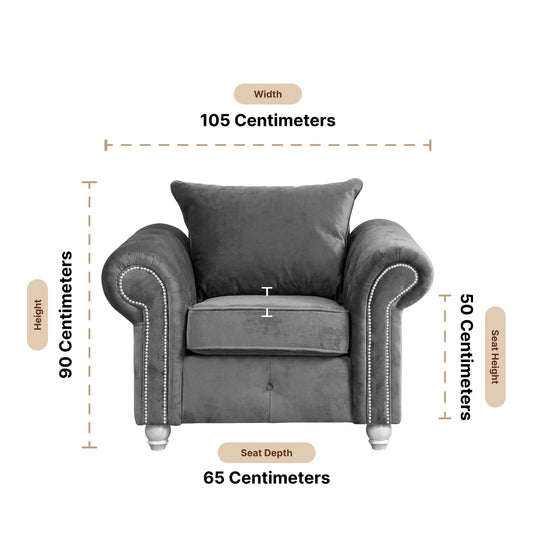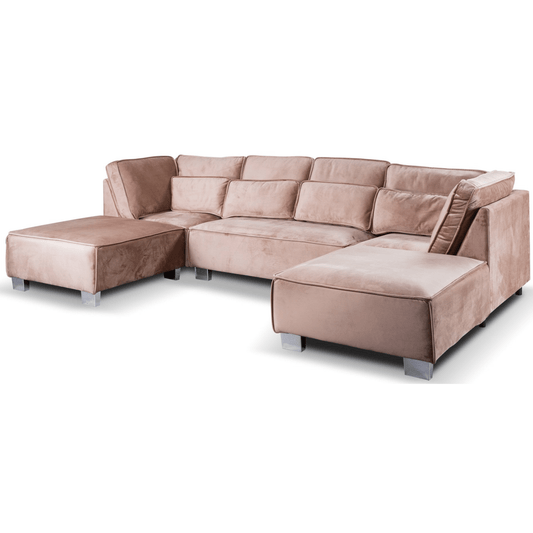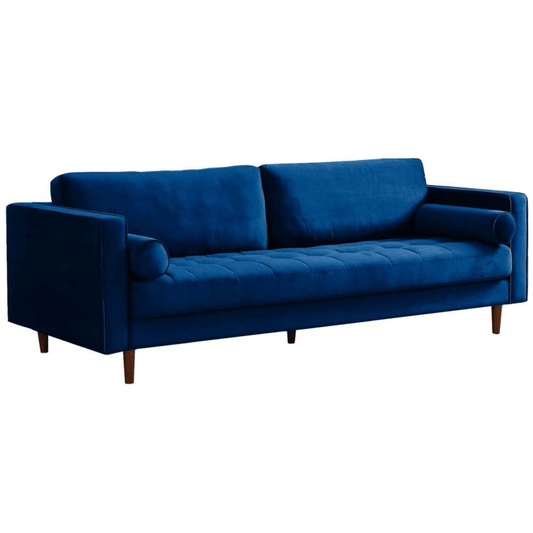

Velvet is a woven fabric with a dense, short pile — a surface of upright fibres cut to an even length that creates the characteristic smooth, soft texture and the distinctive way the fabric interacts with light. Unlike corduroy or boucle, which have a clearly visible texture, velvet's pile is so fine and densely packed that the surface appears smooth while still having the depth and light-catching quality that makes it distinctive.
The optical quality of velvet is the reason it is so visually compelling on a sofa. When light hits the pile at different angles, the fibres reflect and absorb it differently — a velvet sofa looks lighter on surfaces facing the light source and darker on surfaces turned away from it. Move around the room and the sofa's colour appears to shift. This "directional" quality means a grey velvet sofa looks different in morning light than in evening light, different when you are standing across the room than when you are sitting on it, and different in the photograph than in the room itself. It is a fabric that rewards being in the space with it rather than looking at pictures of it.
Modern upholstery velvet is typically made from synthetic fibres — polyester predominantly — which gives it significantly better durability, stain resistance and colour retention than traditional cotton or silk velvet. The term "velvet sofa" in contemporary furniture retail almost always refers to a high-quality polyester velvet that is engineered specifically for upholstery use. This is a better material for a sofa than vintage cotton velvet — it washes more easily, holds colour longer and resists the kind of crushing that natural fibre velvets are more vulnerable to.
Velvet is more discussed, more worried about and more misunderstood than any other sofa fabric. Here is the complete, balanced truth.
Visual quality that no other sofa fabric matches. This is not marketing. The way velvet interacts with light — changing character throughout the day, creating depth in the colour that flat fabrics cannot achieve — is genuinely unique. A navy velvet sofa in a well-lit room does not look like the same colour in photographs as in person. That dimensional quality is the reason people choose velvet when they have the choice, and no other fabric delivers it.
Colour saturation. Velvet holds colour with a richness and depth that flat fabrics cannot match. Jewel tones — navy, emerald, teal, plum — are more vivid and more saturated in velvet than in any other material. Grey in velvet has a richness that grey chenille or weave lacks. Black in velvet has a depth and lustre that makes the sofa look more expensive than its price suggests.
Warmth and softness. Velvet is warm, soft and inviting to sit against — the pile absorbs and retains warmth in a way that leather and flat-woven fabrics do not. For extended sitting during autumn and winter evenings, a velvet sofa is one of the most physically comfortable fabric choices available.
Statement quality without bold colour. Grey velvet creates a more striking living room than grey chenille of the same shade. The material itself makes the room look considered — a velvet sofa signals an intentional aesthetic choice in a way that most other fabrics do not.
Sitting marks. This is the most significant practical limitation of velvet and it is real. When someone sits on a velvet sofa, the pile is compressed where their body contacts the surface. The compressed areas look slightly different from the surrounding uncompressed pile — flatter, and often slightly lighter or darker depending on the direction the fibres were lying. This is called "shading" or "shadowing" and it is a characteristic of all velvet fabrics rather than a defect. It is more or less visible depending on the colour, the quality of the velvet and the angle of light. On a heavily used family sofa, the seat areas will show the impression of use more clearly than on a chenille or weave sofa.
Pet hair. Pet hair embeds in velvet pile more readily than in most other fabrics. It sits across the pile surface and catches in the dense fibres, making removal more labour-intensive than on leather or tight weave. On a dark velvet sofa with light-coloured pet hair — or vice versa — the visual contrast makes the hair very visible. This is not insurmountable, but it requires consistent maintenance effort that many pet-owning households do not sustain.
More maintenance than flat fabrics. Velvet requires regular pile restoration — brushing the pile back to its natural direction to maintain the sofa's appearance. It requires more careful vacuuming technique. Spills need immediate attention because liquid soaks into the dense pile quickly. It is not a high-maintenance fabric in absolute terms, but it requires more consistent attention than chenille, weave or leather.
More than any other sofa fabric, velvet suits specific households and specific rooms better than others. Here is a direct assessment.
Many households use velvet successfully in a main living room — the key is being realistic about the maintenance commitment and managing the practical limitations actively. A grey or dark velvet sofa in a family room without pets, with owners who vacuum regularly and treat spills immediately, performs well over years of use. The sitting marks become familiar rather than distressing — the same way a leather sofa's patina becomes part of its character rather than evidence of deterioration.
If you are genuinely uncertain, a corduroy or jumbo cord sofa offers a similar visual texture interest with meaningfully better practicality — the ribbed structure hides marks more effectively than velvet's smooth pile. Or call us on 02476 705 600 and describe your household — we will give you a straight answer.
| Fabric | Visual quality | Sitting marks | Pet hair | Maintenance | Best for |
|---|---|---|---|---|---|
| Velvet | Outstanding — dimensional, light-catching | Visible — pile shows compression | Poor — embeds in pile | Higher — regular pile care required | Lower-traffic rooms, no pets, appearance priority |
| Chenille | Warm, soft — good not exceptional | Low — hides marks well | Moderate — some embedding | Low — forgiving and easy | Family homes, heavy daily use |
| Weave / structured fabric | Consistent, clean — not distinctive | Very low — surface marks | Good — sits on surface | Very low — most practical fabric | Pets, heavy use, maximum practicality |
| Corduroy / jumbo cord | Distinctive ribbed texture — very good | Low-moderate — contained in ribs | Moderate — channels collect hair | Low-moderate — directional care | Texture interest, contemporary rooms |
| Leather Aire | Sleek, clean — no pile depth | Very low — wipes clean | Excellent — brushes off | Very low — wipe clean | Families, pets, maximum practicality |
Colour choice on a velvet sofa matters more than on any other fabric — because the directional quality of velvet amplifies colour in ways that flat fabrics do not. The same shade of grey reads richer, deeper and more complex in velvet than in chenille. The same navy reads more vivid and more saturated. Here is the guide to every colour available in our velvet range.
Grey is the most purchased velvet sofa colour by a significant margin. The reason is that velvet transforms grey from a neutral into a statement — a grey velvet sofa has a depth and richness that grey chenille or weave of the same shade entirely lacks. In morning natural light, grey velvet reads as cool and contemporary. In warm evening artificial light, it deepens and enriches. The pile catches the light across the seat cushions, back and arms in a way that creates constant, subtle visual variation without any bold colour choice.
Light grey velvet suits smaller rooms and rooms with limited natural light — the paler tone keeps the room feeling open. Mid grey and charcoal velvet suit larger rooms, rooms with higher ceilings and rooms where a stronger, more dramatic quality is wanted. Grey velvet works with almost any wall colour and is the most room-versatile velvet shade available. Browse grey velvet sofas →
Black velvet has a depth that goes beyond simply being dark — the pile catches and absorbs light in a way that gives the surface a three-dimensional quality, and highlights on the raised cushion edges and arm tops provide the only colour variation against the deep black base. A black velvet sofa in a well-lit room with pale walls is one of the most striking living room pieces available. In a more atmospheric, lower-lit room it reads as luxurious and enveloping.
Black velvet has one practical advantage over lighter velvet colours: sitting marks — the slight pile compression from use — are less visible on black than on grey or any lighter shade. The contrast between compressed and uncompressed pile is lower on a very dark surface, making the sofa more forgiving of heavy use than mid-tone velvet shades. Browse black velvet sofas →
Jewel-toned velvet sofas are where the material reaches its full potential for visual impact. The dense, light-absorbing quality of velvet makes deep jewel colours more saturated, richer and more vivid than any other fabric can achieve. A navy velvet sofa in a room with white walls and warm brass accessories is one of the most frequently recreated and most compelling living room combinations in contemporary UK interior design.
Emerald green velvet creates a richly natural, botanical atmosphere. Deep teal balances blue and green in a way that suits a wide range of room styles. Plum and deep burgundy velvet create the most traditional, opulent combination — particularly effective in rooms with warm wood flooring and gold accents. These colours reward a simple surrounding room — white or pale walls, warm wood, minimal accessories — that allows the sofa to be the undisputed focal point.
The principles for pairing wall colours with velvet are the same as for any sofa colour, but the visual weight of velvet means the wall colour relationship matters slightly more — velvet is the most visually dominant fabric material, and the wall needs to either contrast it cleanly or complement it tonally.
White walls let a jewel-toned velvet sofa be the uncontested focal point of the room. The contrast between the clean pale wall and the rich, deep velvet colour is maximum and entirely deliberate. For navy, emerald, teal or plum velvet, white walls are the most effective possible backdrop — the sofa reads as a confident design choice rather than one element competing with others. Off-white creates a slightly softer version of the same combination and suits warm-toned rooms where pure white might feel too stark.
Warm neutral walls create the most comfortable and welcoming pairing for any velvet sofa shade. The warmth of the wall prevents the velvet from reading as heavy or cold, and the tonal softness of a warm neutral wall makes the velvet's visual complexity the room's interest rather than a competition between two bold elements. Warm cream with grey velvet is one of the most consistently well-received combinations in contemporary UK homes — the grey velvet reads as sophisticated against the warm cream background.
Dark walls with a velvet sofa create the most dramatic and immersive living room atmosphere. Charcoal or deep grey walls with a black velvet sofa. Forest green walls with a grey or navy velvet sofa. Deep navy walls with a teal or grey velvet sofa. These combinations require adequate natural light during the day and benefit from warm, atmospheric artificial lighting in the evening. They suit media rooms, home cinemas, formal drawing rooms and any space designed for evening use rather than daytime practicality. The sofa and wall together create an enveloping, designed atmosphere that lighter wall colours cannot achieve.
Sage green walls with a grey or navy velvet sofa create a contemporary, considered room that feels connected to natural materials. The muted, earthy quality of sage green complements the richness of velvet without competing. This combination has been one of the most consistently popular in UK interior design for several years and remains genuinely effective — because both elements share the same organic, natural quality without being identical.
Understanding the directional quality of velvet before you buy prevents the surprise many customers express when their sofa looks slightly different from the photograph. Here is exactly what happens and why it is a quality of the material rather than a problem with the sofa.
Velvet pile has a natural direction — the fibres lie in one direction across the surface when the fabric is applied. When light hits the pile in the direction of the pile lay, the fibres reflect the light and the surface appears slightly lighter. When light hits the pile against the direction of the pile lay, the fibres absorb the light and the surface appears slightly darker. As you move around the room and the angle of light changes relative to the sofa, different areas appear lighter or darker — this is what creates the perceived colour shift.
The practical implications: your sofa will look slightly different from different positions in the room. The back cushions may look slightly lighter than the seat cushions. One end of the sofa may look slightly different from the other end. In certain light conditions, the sofa looks lighter than your photographs; in others, darker. This is the directional quality that makes velvet visually exceptional — it is not inconsistent manufacturing. Once you understand and expect it, it becomes one of the sofa's most appealing qualities rather than a concern.
Before ordering velvet: View the sofa in person if possible, or order a fabric swatch to see the specific colour in your room under your lighting conditions. Velvet changes appearance between photographs and the room more than any other fabric. The sofa you see on a bright white screen will look different on a grey wall in a north-facing room. Call us on 02476 705 600 to request a swatch for any design in our velvet range.
Velvet is not a difficult fabric to care for — it requires a specific approach rather than simply more work. Follow the correct technique consistently and a velvet sofa maintains its appearance remarkably well over years of use.
Every care action on a velvet sofa should work with the pile direction — the direction the fibres naturally lie when smoothed. On most sofas this is downward on the back cushions and toward the front on the seat cushions. Run your hand across the surface gently in both directions — the pile feels smooth in one direction and slightly resistant in the other. The smooth direction is the pile direction. All vacuuming, brushing and spill blotting should work with this direction, never against it.
Vacuum the sofa weekly using a soft brush attachment only — never a stiff brush or bare suction head, which can pull and damage the pile. Set the vacuum to a low to medium suction setting. Draw the brush gently across the surface in the pile direction. This removes dust, debris and surface pet hair from the pile without disrupting the fibres. Regular vacuuming is the single most important maintenance step for a velvet sofa — dust and debris in the pile makes the sofa look dull and accumulates into a surface that is progressively harder to restore.
Sitting marks — the slightly flattened appearance of the pile in areas of regular contact — are a normal feature of velvet use and not a defect. They can be reduced and largely removed by lightly steaming the affected area with a clothes steamer held 15–20cm from the surface, then immediately brushing the pile gently back to its natural direction with a soft velvet brush. The steam relaxes the compressed fibres and allows them to return to their upright position. This technique is highly effective on quality polyester velvet upholstery. Do not apply the steamer directly to the surface — the heat and moisture at close range can damage the pile backing.
Without a steamer, a slightly damp cloth (wrung out thoroughly) pressed gently against the affected area and then removed — not rubbed — followed by gentle brushing in the pile direction also helps lift compressed fibres. This is less effective than steaming but useful for spot treatment between full steaming sessions.
Liquid spills on velvet must be addressed immediately. The dense pile absorbs liquid quickly, and a spill that has soaked in is significantly harder to remove than one that is treated within the first few minutes. Blot — never rub — with a clean, dry cloth or paper towel to absorb as much liquid as possible. Press firmly and repeat with a fresh section of cloth. Rubbing a velvet spill drives the liquid deeper into the pile and spreads the mark. Once the liquid is absorbed, allow the area to dry naturally. Do not apply heat. Once dry, use a soft brush to restore the pile direction.
For food spills, remove the solid material first with a spoon or blunt edge before blotting. For coloured drinks or anything likely to stain, use a specialist velvet upholstery cleaner formulated for the specific stain type — test in an inconspicuous area first.
A professional upholstery clean by a specialist who is experienced with velvet is recommended every one to two years for a velvet sofa in regular use. Professional cleaning removes the deep accumulation of dust, skin cells and environmental debris that home vacuuming cannot address, and treats the fabric against future soiling. Specify that the sofa is velvet when booking — incorrect cleaning techniques can permanently flatten or damage the pile. Do not steam-clean a velvet sofa using a standard carpet cleaner — the high-pressure steam is too forceful for the pile backing.
Rotate and redistribute cushions regularly so the pile wears evenly across the sofa rather than concentrating in one or two positions. Plump and reposition cushions daily — this restores the pile more naturally than any cleaning technique. Avoid sitting in precisely the same position every time, which creates consistent compression patterns. Use the sofa across all seats rather than always using the same end.
A velvet sofa is the most visually complex piece of furniture a room can contain — the pile texture, the directional light variation and the colour depth make it an inherently busy visual element. The rooms where velvet sofas look best are the ones where every other element is simpler — white walls, clean-lined side tables, simple lighting, minimal decorative objects. The less the room competes with the sofa, the more the sofa's quality shows.
For grey velvet: warm mustard, burnt orange, terracotta and warm brass — the warm earthy tones create the most effective contrast against cool grey velvet. Dusty rose and blush add softness. Deep jewel tone cushions — navy, emerald — add drama without competing.
For black velvet: warm gold and brass metallics, warm cream and ivory throws, bold jewel tone cushions in emerald, sapphire or ruby. Terracotta rugs and warm wood accessories prevent the sofa from reading as heavy or cold.
For jewel-toned velvet: warm brass and gold accents echo the richness of the velvet colour. Cream and natural linen cushions provide contrast without competing. Natural plants and botanical elements reinforce the organic quality of deep jewel tones.
A grey or black velvet sofa in a white-walled, minimal contemporary room creates the most striking and photographable combination. The structured modernity of the room provides the contrast that makes the velvet's visual richness show clearly. Keep furniture clean-lined and surfaces uncluttered — velvet does not need styling support when the room is calm around it.
A jewel-toned velvet sofa in a room with period architectural features — cornicing, sash windows, fireplaces — is exactly where the material has been at home for centuries. Navy or teal velvet with a Chesterfield silhouette, warm wood flooring, brass lamps and botanical prints creates a room of deliberate and coherent historical character.
Delivery to England and Wales is free on all in-stock velvet sofas, typically within 7 working days. You receive a confirmed delivery date once your order is placed. The day before delivery, we call to confirm your 2-hour arrival slot.
Our own two-person employed team — not a courier — delivers your sofa, positions it in your chosen room and removes all packaging. Straight velvet sofas (2-seater, 3-seater) are delivered as a single piece — check your front door width and hallway before ordering. Corner sofas arrive in sections and are assembled in the room. If you've added old sofa removal at checkout, the team takes your existing sofa away on the same visit.
We've been supplying quality sofas to homes across the UK for over 20 years. Here is what every order includes.
⭐⭐⭐⭐⭐ Rated Excellent on Trustpilot · 4.8 / 5 from 2,000+ verified reviews · Read all reviews →
Velvet sofas require more consistent maintenance than chenille, weave or leather but are not impractical for the right household. They are best suited to lower-traffic rooms, households without shedding pets and households willing to maintain a regular care routine — weekly vacuuming with a soft brush, immediate spill treatment and periodic pile restoration by steaming. For a busy family living room with young children and pets, chenille, weave or Leather Aire are more forgiving choices. For a room where appearance is the priority and the household treats the sofa with care, velvet performs well over years of use.
Yes — this is a characteristic of velvet rather than a defect. The pile compresses slightly where people sit, creating a subtle difference in appearance between used and unused areas. The marks are more or less visible depending on the colour (darker shades show them less), the quality of the velvet, and the light conditions. They can be reduced by steaming the affected area lightly and then brushing the pile gently back to its natural direction. Most velvet sofa owners habituate to this feature quickly and find it part of the fabric's character rather than a persistent problem.
Vacuum weekly with a soft brush attachment on low to medium suction, working in the pile direction. Blot liquid spills immediately with a clean dry cloth — never rub. For sitting mark restoration, lightly steam the area with a clothes steamer held 15–20cm away, then gently brush the pile back to its natural direction. For deeper cleaning, use a specialist velvet upholstery cleaner tested in a hidden area first. Professional upholstery cleaning every one to two years maintains the fabric best. Never use a bare vacuum head or stiff brush, which can damage the pile.
A quality polyester velvet upholstery sofa with proper care lasts 8 to 12 years in regular daily use. In a lower-traffic room with consistent care, it can last longer. The limiting factor is usually pile condition — in high-contact areas the pile can flatten progressively over years of use without regular restoration. Regular steaming and pile brushing significantly extends the appearance life of the fabric. Poor care — infrequent vacuuming, spills left to set, heavy daily use without pile restoration — reduces the fabric's appearance life at a faster rate than with other sofa fabrics.
They suit different households and different priorities. Velvet is more visually spectacular — the light-catching pile depth is unique and creates a more striking room. Chenille is significantly more practical — it hides marks better, handles pet hair better, requires less specific care and is more forgiving of heavy daily use. For a statement sofa in a considered room, velvet. For a family home's main sofa, chenille. If you want texture and visual interest with better practicality than velvet, corduroy (jumbo cord) sits usefully between the two.
This is the directional quality of velvet — it is a characteristic of the fabric and one of its most appealing qualities. Velvet pile lies in a natural direction, and light hitting the pile at different angles is reflected or absorbed differently, making the surface appear slightly lighter or darker depending on the viewing angle. This means the sofa looks different in morning light vs evening light, from across the room vs sitting on it, and under artificial light vs natural light. It is not an inconsistency — it is the quality that makes velvet visually distinctive. Expect and appreciate it rather than being surprised by it.
Not ideally. Pet hair embeds in velvet pile more readily than in most other fabrics, and lighter-coloured hair against dark velvet (or dark hair against light velvet) is very visible. Removal requires more effort than on leather or tight weave fabrics. If you have shedding pets that use the sofa regularly, weave fabric or Leather Aire are significantly more manageable choices. If you have pets but they use the sofa occasionally rather than daily, and you are willing to vacuum consistently, velvet is manageable with regular effort.
White and off-white walls are most effective for jewel-toned velvet sofas — the contrast is maximum and the sofa becomes the room's clear focal point. Warm neutrals — cream, greige, warm stone — create the most welcoming pairing for grey velvet. Sage and muted greens create a contemporary, natural combination. Dark walls — charcoal, deep navy, forest green — create the most atmospheric and immersive room for any velvet colour. Avoid busy wallpaper patterns alongside velvet — the sofa is already visually complex and competing patterns create visual noise rather than interest.
Yes. 0% interest-free finance is available from £499 across 12, 24 or 36 month terms. Apply at checkout in minutes. Subject to credit check and approval.
Most in-stock velvet sofas are delivered within 7 working days to England and Wales. Delivery is free. You receive a confirmed delivery date at checkout and a 2-hour arrival window confirmation the day before delivery.
We offer 14-day returns on all sofas. If the sofa isn't right for any reason, call us within 14 days of delivery on 02476 705 600. We arrange collection and process a full refund. The sofa must be in its original condition.
Every sofa at Furniture Instore comes with a manufacturer's frame warranty covering structural defects. Full details on each individual product page. Warranty queries handled directly by our team on 02476 705 600.
Furniture Instore · Coventry | Free delivery England & Wales — 7 working days | 0% finance from £499 | 14-day returns | 02476 705 600 · Mon–Sat 9am–5pm