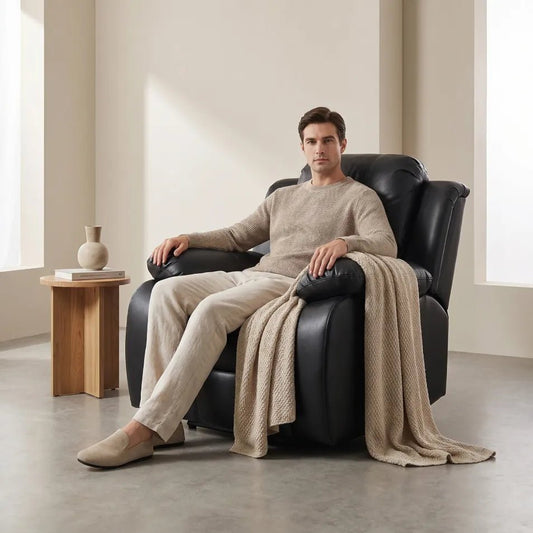
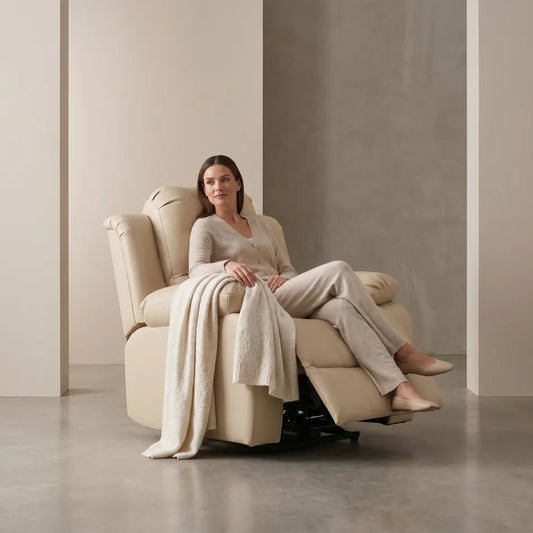
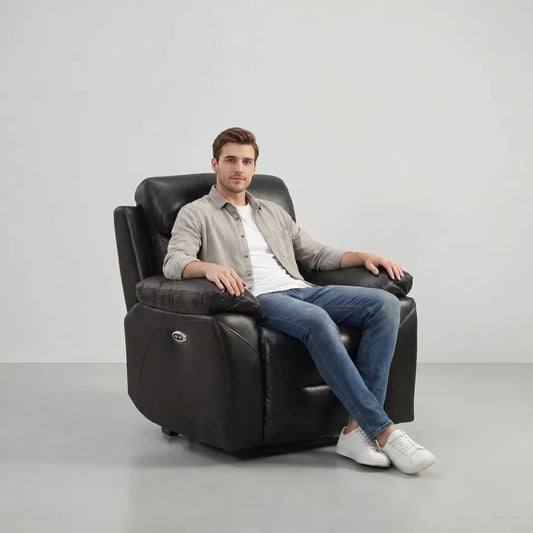
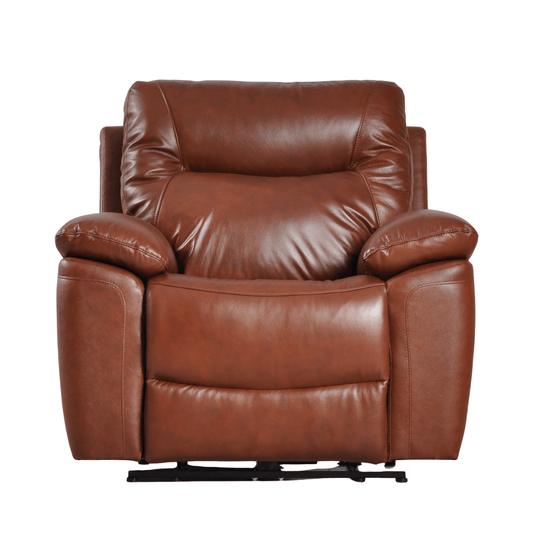
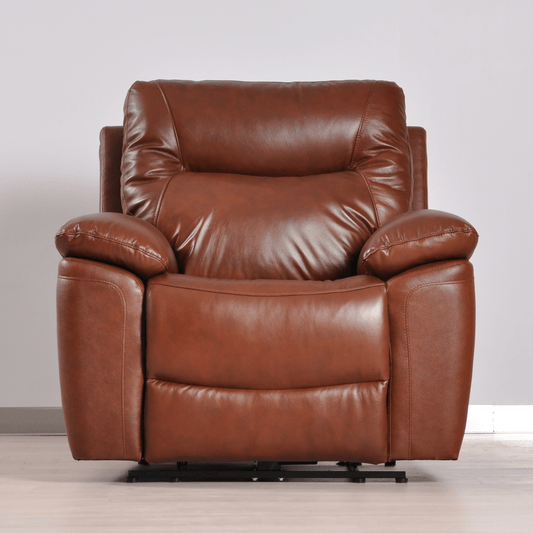
What Is in This Collection?A multi-brand collection of single leather electric recliner chairs from Valencia Electric, Renato and Amarien, in black, cream and tan. Each chair reclines with a powered motor and needs a mains socket. Three of the four chairs are currently in stock.
What is an electric recliner chair?
An electric recliner chair is a single-seat armchair that reclines at the touch of a button. Instead of a manual lever or a push-back action, a built-in motor moves the backrest and footrest, so you can stop at whatever position feels comfortable and the chair holds it there. Because the mechanism is powered, the chair plugs into a mains socket rather than working purely by hand.
The appeal is a dedicated relaxing seat that you control precisely: sit upright to read, ease back to watch television, or recline fully to rest. Every chair in this collection is that kind of single powered recliner, finished in leather, so the differences between them come down to brand, colour and price rather than the basic idea. For coordinated seating beyond a single chair, browse our recliner sofas collection.
The brands in this collection
This is a multi-brand collection rather than a single range, which means you are comparing chairs that do the same job but come from different makers. At the time of writing it brings together Valencia Electric, available here in black and cream; Renato, a black chair at a higher price point; and Amarien, a tan chair. They are grouped because they are all single leather electric recliner chairs, not because they belong to one family.
Buying across brands like this gives you a genuine choice of look and price in one place, so it is worth opening each product page to compare the shape, the arm and headrest profile, the stitching and the overall stance of the chair before you decide. Valencia Electric sits at the accessible end here; Renato is priced higher; and Amarien offers the tan option. None is presented as better than another — they simply suit different budgets and tastes. If you would rather see non-reclining seats as well, our wider armchairs collection is a good place to start.
Colour choices: black, cream and tan
Across the current chairs the colours are black, offered by both Valencia and Renato; cream, offered by Valencia; and tan, offered by Amarien. Black is the easy, hard-wearing-looking neutral that suits most rooms; cream is softer and lighter, lifting a space but showing more; and tan is a warm mid-brown that brings a classic, lived-in feel.
Colour is tied to the individual chair and brand rather than offered across every model, so if a particular colour is essential, note which chair it belongs to. For darker leather seating in other formats, see our black recliner sofas collection, and always treat the live product images as the best guide to the exact shade.
The leather
Each chair is described in its title as leather. We have kept to that wording deliberately: the current product data does not confirm the exact grade or construction of each chair's leather, so we describe them simply as leather rather than claiming a specific type such as genuine or full-grain, and we do not label them faux or bonded either. Where the data does not tell us, we would rather leave the grade to be confirmed than state something we cannot stand behind.
If the leather type matters to you, check the individual product page or call our team, and we will confirm what we can before you order. Whatever the grade, leather tends to feel cool at first and warm with use, wipes clean more easily than fabric, and develops character over time, which is part of its appeal on a chair you will use daily. To compare leather across sofas and sets, our leather sofas collection shows the wider range.
How the powered reclining works
Each chair reclines using an electric motor operated by a button or handset, so rather than being limited to a few fixed notches you can hold the backrest and footrest wherever you find them comfortable. The exact controls, the number of motors and any handset detail are set per model and are not fully specified in the current data, so treat each product page as the authority on how that particular chair operates.
Powered reclining is smooth and effortless to adjust, which is the main reason people choose it over a manual mechanism: there is no need to push back against the chair or heave a lever, so you can settle and fine-tune the angle with a fingertip. It also means you can pause at any point between fully upright and fully reclined, rather than dropping into a single fixed rest position. If you would like the same powered comfort across a two- or three-seater as well, see our electric recliner sofas collection.
Do you need a power socket?
Yes. These are electric recliners, so each chair needs to reach a mains socket to work. That is worth planning before the chair arrives: decide where it will sit, check there is a socket within reach of the cable, and keep the lead clear of the reclining mechanism and of any walkway. It is a small consideration, but it affects where in the room the chair can realistically go.
If cable routing or socket position is awkward in your room, call us on 02476 705 600 before ordering and we will talk it through. For manual alternatives that do not need power at all, our broader recliner sofa sets collection includes a range of mechanisms.
Choosing the right chair for you
Because every chair here is a single leather electric recliner, the choice is refreshingly simple: start with the colour that suits your room, then think about budget, since the chairs sit at different price points, and finally compare the shape and detailing of each model. There is no configuration ladder to weigh up as there would be with a sofa range, so it really is about look, colour and price.
Measure the space the chair will occupy both upright and reclined, since the footrest and backrest need room to extend, and check the depth the chair reaches when fully back so it will not touch a wall or a coffee table. If you can, sit in a similar chair in our showroom first, as seat height and depth make a real difference to comfort and are hard to judge from a photograph. If you think you might want matching larger seating later, it is worth glancing at our recliner sofas range so you can picture how a chair might sit alongside a sofa.
Where a recliner chair works in the home
A single recliner chair is one of the more compact ways to add a dedicated comfortable seat. It suits a corner of the living room, a spot beside a sofa, a bedroom reading nook or a snug, giving one person their own place to settle without the footprint of extra seating. Remember to leave clear space for the footrest to extend and a route to a socket.
Used this way, a chair can complement rather than replace your main seating, giving one person a favourite spot without committing the whole room to reclining furniture. In a bedroom it makes a comfortable place to read or dress; beside a sofa it gives a guest or partner their own seat; in a snug it becomes the prime position for television. If a lighter, softer look would suit the room, the cream option is worth a look, and you can compare paler leather seating in our cream recliner sofas collection.
Stock and availability
At the time of writing three of the four chairs are in stock: the Valencia black, the Valencia cream and the Renato black. The Amarien tan chair is currently out of stock, and the Valencia black shows low stock, so if either is the one you want it is worth acting fairly promptly or registering interest. Stock moves, so the live product pages are always the best guide to what can be bought today.
If the tan chair is the one you have set your heart on, use the back-in-stock option on its product page and we will let you know when it returns. In the meantime, the in-stock chairs are all worth comparing, and our wider recliner chairs collection shows further options.
Delivery, finance and returns
Delivery is free to England and Wales and is handled by our own two-person team, delivering to a ground-floor room. The standard timeframe is 7–10 working days; the product pages currently show a shorter message, and that wording is being aligned internally, so treat the product page and our team as authoritative for timing. A single chair is a more manageable delivery than a sofa, but access still matters, so tell us at the point of order if the route is tight.
You can spread the cost with PayPal Pay in 3, Klarna Pay in 3 or Pay in 30, Clearpay in 4 interest-free fortnightly payments, or DivideBuy, interest-free where stated and subject to credit check. Order with confidence under our 14-day returns policy. For powered seating in sofa form, see our electric recliner sofas collection.
Why buy from Furniture Instore
We bring these chairs together so you can compare single leather electric recliners from several brands in one place, with honest information about colour, material and stock, including being clear about what is and is not confirmed and what is currently available. That honesty extends to the leather grade, which we leave to be confirmed rather than overstated, and to the mechanism, which we describe as powered comfort rather than overstating what it does.
Behind that sits a 4.8★ Excellent rating from over 4,800 genuine Trustpilot reviews, free two-person delivery to England and Wales, and a Coventry showroom you can call on 02476 705 600 for advice before you buy.
Frequently asked questions
What is an electric recliner chair?
An electric recliner chair is a single-seat armchair that reclines at the touch of a button, using a built-in powered motor rather than a manual lever or push-back action. You set the backrest and footrest to the position you find comfortable, and the motor holds it there. Because the mechanism is powered, the chair needs to be plugged into a mains socket to work.
Which brands are in this collection?
This collection brings together electric recliner chairs from three brands: Valencia Electric (available here in black and cream), Renato (black), and Amarien (tan). They are grouped because they are the same type of product — single leather electric recliner chairs — rather than because they share a range, so compare them on price, colour and the look you prefer.
What colours are available?
Across the current chairs the colours are black (Valencia and Renato), cream (Valencia) and tan (Amarien). Colour availability is tied to the individual chair and brand rather than offered across every model, so if a specific colour matters, check which chair it belongs to. Treat the live product pages and images as authoritative for the exact shade.
What is the difference between the chairs?
The main differences are brand, colour and price. The Valencia Electric chairs are the entry point and come in black or cream; the Renato is a black chair at a higher price; and the Amarien is a tan chair. All four are single-seat leather electric recliner chairs, so the choice comes down to the colour you want, your budget and the look of each model on its product page.
How does the electric reclining mechanism work?
Each chair reclines using a powered motor operated by a button or handset, so you can stop the backrest and footrest at the position you prefer rather than being limited to fixed notches. The exact controls, number of motors and any handset details are set per model and are not fully specified in the current data, so check the individual product page for how a particular chair operates.
Do I need a power socket near the chair?
Yes. These are electric (powered) recliners, so each chair needs to reach a mains socket to operate. Plan where the chair will sit with a socket within reach of its cable, and keep the lead clear of the reclining mechanism and walkways. If cable routing is a concern for your room layout, call us on 02476 705 600 before ordering.
What material are the chairs?
The chairs are described in their titles as leather. The exact grade or construction (for example whether a particular chair is full-grain, top-grain or a leather with a coated finish) is not confirmed in the current product data, so we describe them simply as leather rather than claiming a specific grade. Check the individual product page for the material detail, or call us and we will confirm what we can.
Are they genuine leather?
The product titles say leather, but the current data does not confirm the exact grade or construction, so we do not claim a specific type such as “genuine” or “full-grain” on this page, and we do not describe them as faux or bonded either. We would rather leave the grade to be confirmed on the product page than state something we cannot verify. Please check the product page or contact us before ordering if the leather type is important to you.
Which chairs are in stock?
At the time of writing three of the four chairs are in stock — the Valencia black, the Valencia cream and the Renato black — while the Amarien tan chair is out of stock. The Valencia black shows low stock. Stock changes constantly, so treat the live product pages as authoritative, and use the back-in-stock option on the Amarien tan if you would like to be notified when it returns.
How much do the chairs cost?
At the time of writing the in-stock chairs start from around £449.99 for the Valencia Electric chairs, with the Renato at a higher price point. The out-of-stock Amarien is listed lower but cannot be bought until it returns. Prices change, especially where a sale price is shown against a previous price, so treat the individual product page as authoritative for the current figure.
Why is the tan chair labelled differently in its images?
The Amarien chair's title describes it as tan, while some of its images use the word brown. Tan is a light brown, so the descriptions are close, but if the exact shade matters to you, we would suggest checking the product images carefully or calling us on 02476 705 600 so we can describe the colour as accurately as possible before you order.
Is finance available on a recliner chair?
Yes. You can spread the cost with PayPal Pay in 3, Klarna Pay in 3 or Pay in 30, Clearpay in 4 interest-free fortnightly payments, or DivideBuy. These options are interest-free where stated and are subject to a credit check. The exact options available at checkout can vary, so you will see what applies to your order before you confirm it.
What is the delivery service and cost?
Delivery is free to England and Wales and is carried out by our own two-person team, so there is no third-party courier to deal with. The team delivers to a ground-floor room. The standard timeframe is 7–10 working days, though the product pages currently show a shorter message; that wording is being aligned internally, so please treat the product page and our team as authoritative for the current timeframe.
Can you take the chair upstairs?
Our two-person team delivers to a ground-floor room as standard. A recliner chair is a single, fairly manageable item compared with a sofa, but access still matters, so if the chair needs to go upstairs or through a tight doorway or lift, please tell us when you order by calling 02476 705 600 and we will let you know what we can do.
What is the returns policy?
We offer 14-day returns, sometimes described as 14 days to change your mind. If you decide the chair is not right, contact us within 14 days of delivery on 02476 705 600 and we will talk you through the process. Please keep the chair in good condition, and keep the packaging where you can, as that makes any return easier to arrange.
What do your reviews say?
Furniture Instore holds a 4.8★ Excellent rating from over 4,800 genuine Trustpilot reviews. That reflects the whole shopping experience, from ordering to our two-person delivery, rather than any single product, so we would still encourage you to read the individual chair's product page and reviews for detail specific to that model.
Can I register to be told when the tan chair is back?
Yes. The Amarien tan chair is currently out of stock, and its product page offers a “notify me when back in stock” option; enter your email there and you will be alerted when it returns. If you like the look but do not want to wait, the in-stock Valencia and Renato chairs are worth comparing, or call us on 02476 705 600 for advice.
How do I choose between the chairs?
Start with the colour that suits your room — black, cream or tan — then consider your budget, since the chairs sit at different price points, and finally look at the shape and detailing of each model on its product page. Because every chair here is a single-seat leather electric recliner, they suit the same purpose, so it really comes down to look, colour and price.
Are these chairs suitable for a small room?
A single recliner chair is one of the more compact ways to add a dedicated relaxing seat, so it can suit a smaller room, a bedroom corner or a spot beside a sofa. Do remember that the footrest and backrest need clear space to extend when reclined, and that the chair needs to reach a socket, so measure the reclined footprint as well as the upright one.
How do I look after a leather chair?
As a general guide, keep leather out of direct sunlight and away from direct heat, wipe spills promptly with a soft dry cloth, and dust regularly. Because the exact leather grade and finish are not confirmed here, avoid household chemicals and follow any care guidance supplied with the chair, or ask us before using a specific leather product, so you do not risk damaging the finish.
How can I get advice before ordering?
You can call our team on 02476 705 600, Monday to Saturday, 9am to 5pm, and we will help with colour, stock, delivery access, finance and anything else you need. We are based at 440–450 Stoney Stanton Road, Coventry, CV6 5DG. For anything the current product data does not confirm — such as exact leather grade or mechanism detail — we would rather check for you than guess.
Furniture Instore — Coventry, 440–450 Stoney Stanton Road, CV6 5DG
Free delivery to England & Wales | PayPal, Klarna, Clearpay & DivideBuy (interest-free where stated, subject to credit check) | 14-day returns
02476 705 600 — Monday–Saturday 9am–5pm