
-
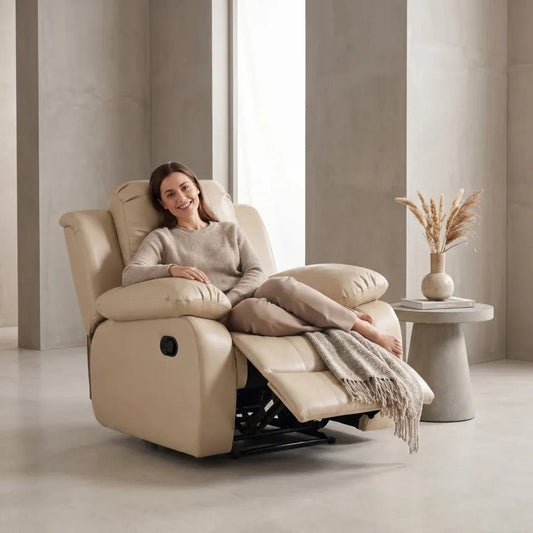
Vendor:Valencia
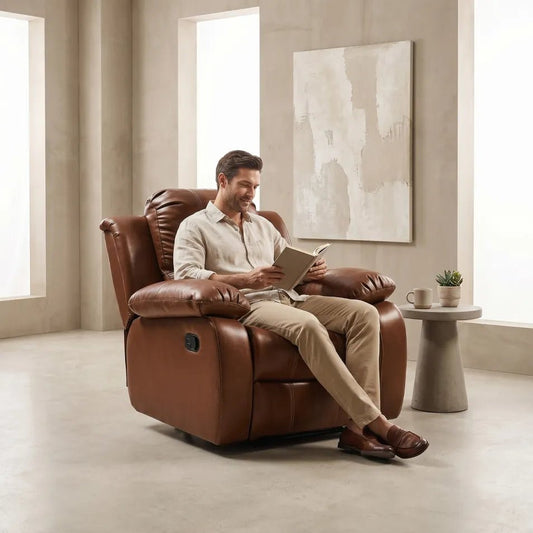
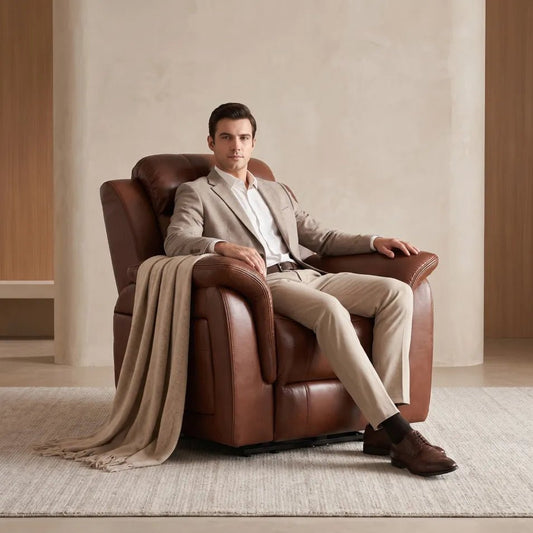
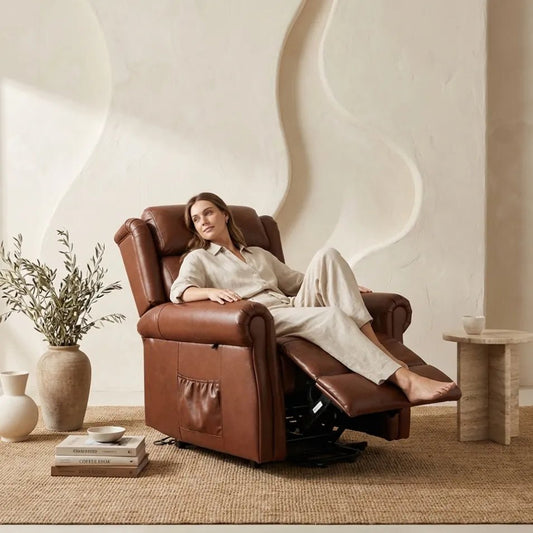
Valencia Leather Tan Manual Recliner Armchair
Regular price Sale £399.9910 + in stockRegular price Was £749.99 | Sale price Save £350.00Unit price perDelivered within 7 days -
Vendor:Valencia
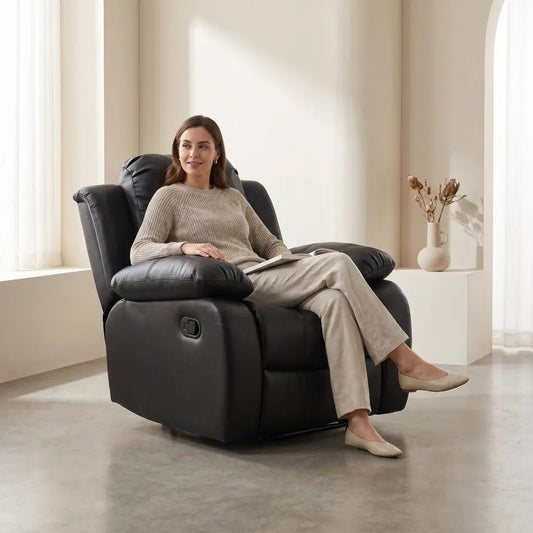
Valencia Black Leather Recliner Chair – Manual Control
Regular price Sale £399.9910 + in stockRegular price Was £749.99 | Sale price Save £350.00Unit price perDelivered within 7 days -
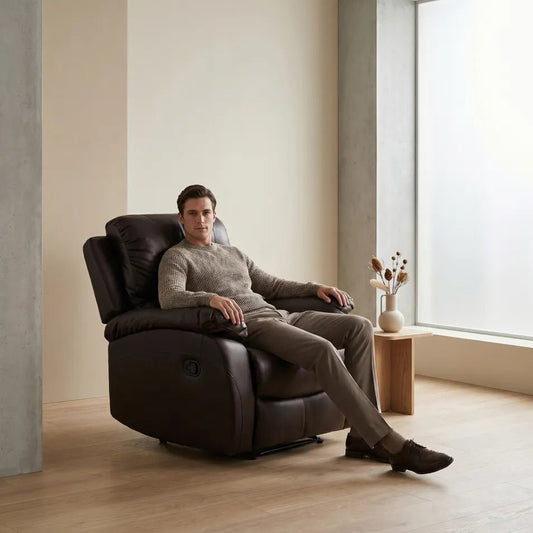
Vendor:Roma Leather
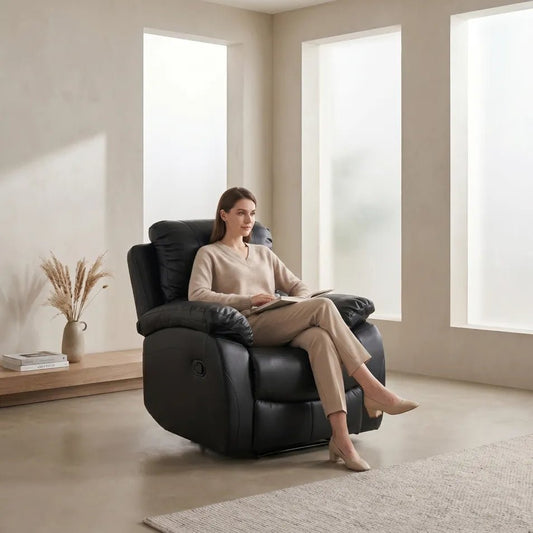
Roma Black Leather Manual Recliner Armchair
Regular price Sale £399.9910 + in stockRegular price Was £469.99 | Sale price Save £70.00Unit price perDelivered within 7 days -
Clearance SaleOutlet

 Vendor:Cinema
Cinema Black Electric Leather Recliner Armchair With Two Cup Holders
Regular price Sale £299.995 Left in stockRegular price Was £649.99 | Sale price Save £350.00Unit price perDelivered within 7 days -
Vendor:Annecy
Annecy Genuine Leather Grey Electric Power Recliner Armchair
Regular price Sale £649.9910 + in stockRegular price Was £949.99 | Sale price Save £300.00Unit price perDelivered within 7 days -
Vendor:Tanya
Tanya Beige Fabric Electric Recliner Armchair
Regular price Sale £449.990 Left in stockRegular price Was £849.99 | Sale price Save £400.00Unit price perOut of Stock. Notify me when back in stock -
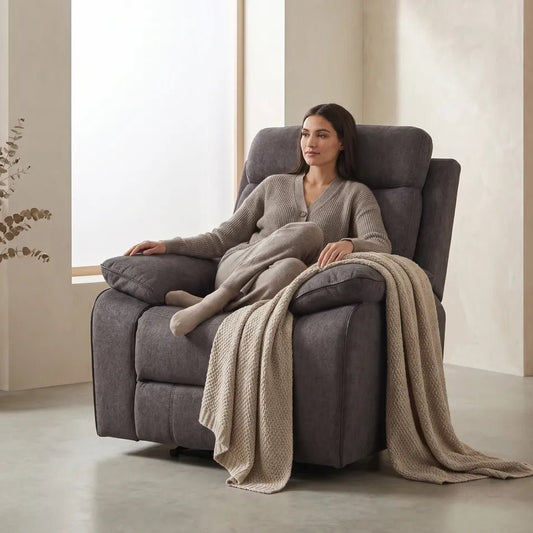
Vendor:Tanya
Tanya Grey Fabric Electric Recliner Armchair
Regular price Sale £449.9910 + in stockRegular price Was £849.99 | Sale price Save £400.00Unit price perDelivered within 7 days -

Spread the cost for your new sofa
-
Vendor:Maple
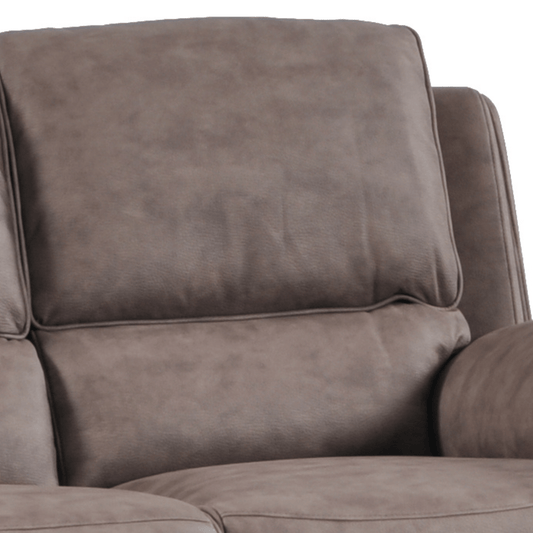
Maple Brown Suede Fabric Electric Recliner Armchair
Regular price Sale £449.990 Left in stockRegular price Was £749.99 | Sale price Save £300.00Unit price perOut of Stock. Notify me when back in stock -
Vendor:Valencia
Valencia Cream Leather Manual Recliner Armchair
Regular price Sale £399.9910 + in stockRegular price Was £749.99 | Sale price Save £350.00Unit price perDelivered within 7 days -
Sold outClearance SaleOutlet

 Vendor:Cinema
Cinema Tan Electric Leather Recliner Armchair With Two Cup Holders
Regular price Sale £299.990 Left in stockRegular price Was £649.99 | Sale price Save £350.00Unit price perOut of Stock. Notify me when back in stock -
Vendor:Annecy
Annecy Genuine Leather Black Electric Power Recliner Armchair
Regular price Sale £649.9910 + in stockRegular price Was £949.99 | Sale price Save £300.00Unit price perDelivered within 7 days -
Vendor:Bilbury Rise & Recline
Bilbury Genuine Leather Tan Rise Recliner Mobility Chair
Regular price Sale £499.990 Left in stockRegular price Was £999.99 | Sale price Save £500.00Unit price perOut of Stock. Notify me when back in stock -
Vendor:Roma Leather
Roma Brown Leather Manual Recliner Armchair
Regular price Sale £399.9910 + in stockRegular price Was £469.99 | Sale price Save £70.00Unit price perDelivered within 7 days -
Vendor:Foster
Foster Dark Grey Fabric Electric Recliner Armchair
Regular price Sale £449.9910 Left in stockRegular price Was £699.99 | Sale price Save £250.00Unit price perDelivered within 7 days -
Clearance SaleOutlet

 Vendor:Cinema
Cinema Grey Electric Leather Recliner Armchair With Two Cup Holders
Regular price Sale £299.9910 + in stockRegular price Was £649.99 | Sale price Save £350.00Unit price perDelivered within 7 days -
Vendor:Cidliano
Cidliano Tan Leather Electric Recliner Armchair
Regular price Sale £649.992 Left in stockRegular price Was £949.99 | Sale price Save £300.00Unit price perDelivered within 7 days -
Vendor:Kingsbury Rise & Recline
Kingsbury Genuine Leather Tan Rise Recliner Mobility Chair
Regular price Sale £499.990 Left in stockRegular price Was £999.99 | Sale price Save £500.00Unit price perOut of Stock. Notify me when back in stock -
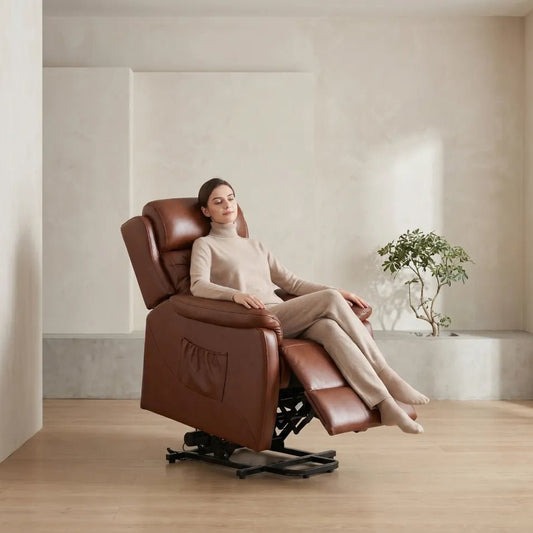
Vendor:Hunson Rise & Recline
Hunson Genuine Leather Cream Rise Recliner Mobility Chair
Regular price £499.99Unit price per3 Left in stockDelivered within 7 days -
Vendor:Valencia
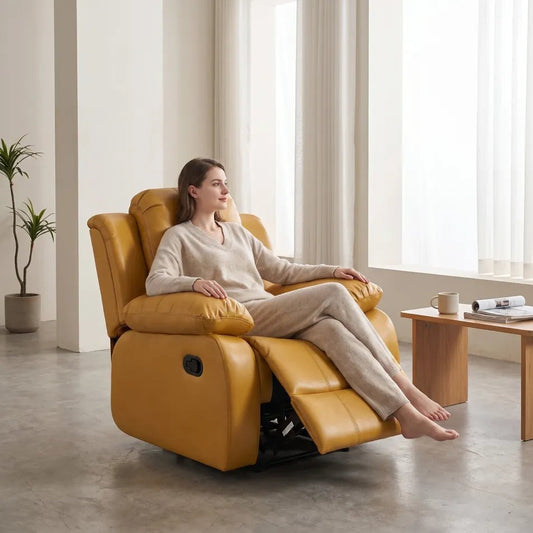
Valencia Leather Mustard Manual Recliner Armchair
Regular price Sale £449.994 Left in stockRegular price Was £469.99 | Sale price Save £20.00Unit price perDelivered within 7 days















What is in this collection
61 single-seat recliners, 45 in stock, across ten ranges including Valencia, Roma, Annecy, Tanya, Cinema, Foster, Conway, Kingsbury and Hunson. Some are electric, some manual, and the upholstery runs across fabric, Leather Aire, leather and genuine leather. For single seats of every kind, see our armchairs and 1 seater sofas collection.
A chair, or a reclining sofa?
Worth settling first, because it is the expensive decision. A chair suits a household where one person reclines and the others do not, or a room with no wall run to spare, and it goes in a corner, a study or a bedroom where a sofa cannot. A reclining sofa suits two or three people who all recline. A cheaper answer is often to keep the sofa you have and add one chair beside it. For the sofa side, see our recliner sofas collection.
Electric or manual
An electric chair runs from a motor and is worked by a button, so it stops wherever you release it rather than at a fixed notch, and it needs a mains socket within reach. A manual chair uses a side lever, has no motor and nothing to plug in, and usually costs less. Choose on whether you want a cable near the chair. For powered seating generally, see our electric recliner sofas collection.
| Type | How it works | Needs a socket | Ranges here |
|---|---|---|---|
| Manual recliner | Side lever, spring-assisted, fixed positions | No | Valencia, Roma, Conway |
| Electric recliner | Button or handset, stops at any angle | Yes, one per chair | Annecy, Tanya, Cinema, Maple, Foster, Valencia |
| Rise and recline | Reclines, and tilts the seat forward towards standing height | Yes, one per chair | Kingsbury, Hunson |
High back or standard back
A high back continues above shoulder height, so your head rests against the chair rather than above it when the back is tilted. A standard back stops lower and reads as the lighter piece in a room. Which suits you depends on your height and how far back you recline, and a photograph will not settle it. For the wider chair category, see our recliner armchairs collection.
Rise and recline chairs
Two ranges here, Kingsbury and Hunson, include a rise and recline model. These have a second motion as well as the recline: the whole seat tilts forward to bring you towards standing height, from the same handset. That is the only mechanical difference, and it means the chair needs room to tilt forward as well as clearance behind and in front. If that motion is what you want, our riser recliner chairs collection has the full choice.
The upholstery types, kept distinct
Fabric on the Tanya, Foster and Conway chairs, the warmest surface and the one that wants vacuuming. Leather Aire, our leather-look upholstery, which wipes clean and needs no conditioner. Leather where a title names no grade, on Valencia, Roma and Cinema. Genuine leather where a title states it, on Annecy, Kingsbury and Hunson. We describe each chair as its own title does. For woven upholstery, see our fabric sofas collection.
| Upholstery | What it is | Care | Ranges here |
|---|---|---|---|
| Fabric | Woven surface, the warmest to sit on | Vacuum weekly; blot spills | Tanya, Foster, Conway |
| Leather Aire | Our leather-look upholstery | Wipe clean; no conditioner | Stated per product |
| Leather | Title states leather but names no grade | Wipe clean; check the care label | Valencia, Roma, Cinema |
| Genuine leather | Natural hide; ages to a patina | Wipe; condition every so often | Annecy, Kingsbury, Hunson |
Genuine leather, leather and Leather Aire
The distinction people most often ask about. Genuine leather is a natural hide that ages to a patina and takes an occasional conditioner. Leather is a chair whose title names no grade, because assuming one invites returns. Leather Aire is our leather-look upholstery, wipe-clean and needing no conditioner. If the specification matters, ring our team rather than infer it. For confirmed hide, see our genuine leather sofas collection.
Space, and the clearance a recliner needs
A recliner takes more room open than closed, and that difference is where people come unstuck. It needs clearance behind for the back to tilt, in front for the footrest, and room at the sides to get in and out and reach the lever or handset. Figures vary by model, so take them from the product page and tape out the open footprint rather than the closed one. Our sofa measuring guide sets out the method.
Sockets, for the electric models
One socket per powered chair, within reach of where it will sit. There is nothing to wire in; it plugs into an ordinary socket like a lamp. Worth deciding in advance is the cable run, particularly if the chair is going in a corner rather than against a wall, because a lead across a walkway is a problem you design out. For sets built around the same mechanism, see our cup holder sofa sets collection.
Getting it through the door
Recliner chairs arrive assembled, so the whole chair has to clear your doorways, hallway turns and any stair landing. A shorter list of obstacles than a sofa faces, but a less forgiving one, because there is nothing to take apart. Compare the packaged dimensions against your narrowest point, not the chair dimensions. If access is awkward, ring us before you order. Our sofa buying guide covers choosing a format.
Colours, and pairing with a sofa you already own
Black, grey, dark grey, tan, brown, cream, beige and mustard all appear. A recliner chair is a standalone piece rather than part of a suite, so it need not match your sofa, and a considered contrast often looks better than a near match that is slightly off. To compare grey, see our grey sofas collection.
Care, by material
Fabric wants vacuuming with an upholstery tool, with attention to the seams around the arms and hinges, and blotting rather than rubbing. Leather Aire wipes clean with a damp cloth. Genuine leather wants a wipe, an occasional conditioner and keeping out of direct sunlight. Whatever the surface, vacuum around the mechanism so crumbs do not work into it. Full guidance is in our care guide.
Looking after the mechanism
Three things keep a recliner working. Leave the clearance behind rather than reclining hard against a wall, which strains the mechanism. Do not stand on an extended footrest or weight it while raised. And if it becomes stiff or makes a new noise, stop using it and ring us. Do not attempt a repair to the motor, wiring or transformer yourself; it is mains-powered equipment and not a DIY job. Our FAQ page sets out how to reach us.
Stock, outlet chairs and single units
45 of the 61 are in stock. Some are flagged outlet or clearance, meaning end-of-line rather than core range: available now or not at all, often down to a single unit. Sixteen are sold out and carry a back-in-stock alert; we will not promise a date. For end-of-line pieces across the store, see our outlet collection.
Delivery
Delivery is free across England and Wales and usually takes 7–10 working days. Our own two-person team, employed rather than a courier, carries the chair into your chosen ground-floor room, positions it and takes the packaging away. Removal of your old chair can be arranged at the same time. Full timescales are on our delivery information page.
Finance, returns and your rights
You can spread the cost with one of our named providers: PayPal Pay in 3, Klarna Pay in 3 or Pay in 30, Clearpay and DivideBuy. Each is interest-free and subject to credit check, with terms set by the provider at checkout. Furniture Instore is a credit broker, not a lender. Our 14-day change of mind returns cover unused items in original condition; separately, your statutory rights under the Consumer Rights Act 2015 cover faulty or misdescribed goods. Our finance options page explains each provider.
Why buy your recliner chair from Furniture Instore
We are a Coventry-based upholstered-furniture specialist and you are welcome to sit in these, work the lever or the button and judge a high back against a standard one, which is the only reliable way to choose. We tell you which chairs confirm genuine leather and which say only leather, we say what clearance a recliner needs rather than quoting one figure for 61 chairs, and there is no frame warranty on this collection whatever other wording on the site says. Customers rate us Trustpilot Excellent, 4.8★ from 4,800+ reviews. Call 02476 705 600.
Frequently asked questions about recliner chairs
Free delivery England & Wales | Interest-free finance, subject to credit check | 14-day returns | UKFR compliant
02476 705 600 · Monday–Saturday 9am–5pm · Coventry showroom
Furniture Instore is a credit broker, not a lender. Finance is subject to status and affordability checks.